Showing posts with label john coltrane. Show all posts

Sunday, August 12, 2012

Music, Music, Music


Great album + Awesome pun = Highly recommended
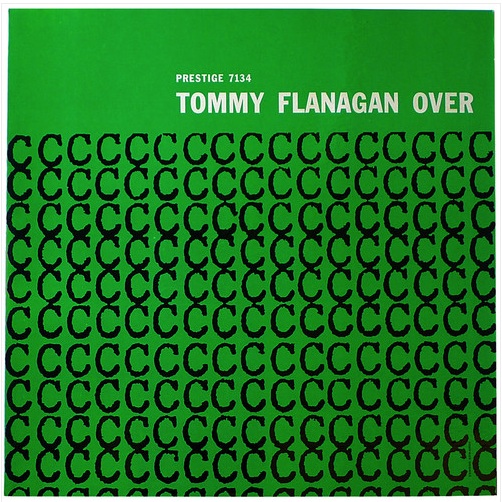
Tommy Flanagan Trio "Overseas" aka "Elvin Plays Amazing Brushes"
I didn't get hip to this album until this year when it was recommended by Jon McCaslin at FOUR ON THE FLOOR, and it has been a joy getting acquainted with it.  It is too easy to form a one-dimensional picture of Elvin Jones.  The irresistible force of his playing in the classic Coltrane quartet overshadows the many other sides of his playing.  Not that I have anything but the deepest love for that group, but it is good to hear Elvin playing in other contexts, in this case a straight-ahead piano trio featuring the great Detroit pianist Tommy Flanagan.  Elvin was a master musician, capable of adapting to fit any context in the enormous range of jazz music.  

The big highlight of this album for me is getting to hear Elvin's nasty brush playing.  In my experience Elvin is a really underrated brush player, despite the fact that his deep, rolling, triplety vocabulary works equally well with sticks or brushes.  Just listen to the track at the top ("Beats Up") for proof!   

Sunday, March 4, 2012

Transitions Part 4: Switching Between Soloists

Two Main Approaches
Transitioning between soloists is one of the most important parts of keeping the momentum of a song alive.  In my first transitions post I discussed the basic choice of every transition, whether to emphasize or de-emphasize it.  This choice gives you two distinct approaches for dealing with this particular transition.  Either you can try to carry the energy and mood of one solo into the next, de-emphasizing the transition by making it smooth, or you can create  dramatic contrast between one solo and the next, thereby emphasizing the transition.  Both approaches can be effective, it is just a matter of finding the appropriate time to use them based on where you feel the music is going. 

1.  The Smooth Transition
The main danger of this kind of transition is that the music will get monotonous.  If there is not enough contrast in the music, you will lose your audience.  That being said, this type of transition can also lead to some of the most exciting and uplifting musical exchanges.  

One of my all time favorite examples of this type of smooth transition is on the album "Live At Birdland" going from McCoy Tyner's solo to John Coltrane's on the tune "Afro Blue" (around 4:50):