Thursday, November 10, 2011

Should all jazz musicians learn how to play the drums?


I originally started this conversation on the All About Jazz forum, and was surprised at the consensus that all musicians would benefit from learning some drums.  Here is the original question that I posed:

"So most jazz musicians agree (myself included) that drummers should learn some piano in order to better understand what is going on around them, and have a more well-rounded approach to music generally. It is easy as a drummer to succumb to a kind of rhythmic tunnel-vision, and piano can help mitigate that by forcing drummers to focus on melody and harmony.

So here is my question, couldn't the same thing be true for other instruments? That is, shouldn't other instrumentalists learn some drums in order to better understand what is going on around them, and have a more well-rounded approach to music generally? I think that everybody intuitively agrees that rhythm is of particular importance in jazz music, "It don't mean a thing if it ain't got that swing".  So why do so few other instrumentalists learn how to play drums? "
What do you guys think?  Should other instrumentalists learn some drums?  If yes, what are the benefits?  If no, why not?   Post your answers below.

Monday, November 7, 2011

Beginning Improvisation Part 2

Two new elements
In the first post about learning to improvise, I introduced the basic idea of improvising simple rhythms in time.  In the following exercise we will start to deal with two new elements.  The first element is the eighth note which will change the density of the rhythms you are playing.  The second element is dynamics which will allow you to change the volume of your rhythms.

Sunday, November 6, 2011

Essential books for jazz drummers

This is a list of books that I consider essential for anyone who wants to learn jazz drumming:


This book is a classic reading text that I recommend not so much for the book itself, as for the curriculum that has been built up around this book over the years.  "Syncopation" has been used as the basis for innumerable exercises for developing jazz coordination, most successfully and famously by Alan Dawson in the following book on this list. 

Friday, November 4, 2011

jazztruth: Jam Session Etiquitte; The Obvious

jazztruth: Jam Session Etiquitte; The Obvious: I've been going to jam sessions off and on for easily 20 years or more. (Yeah, I'm older than you might think. I actually got carded the ot...

Max Roach: Comping as soloing


Comping as soloing
In an earlier post I discussed Max's approach to soloing in a general sense.  In today's post I am going to zero in on a particular solo technique that Max used very frequently, and to great effect.  The technique I am referring to is using comping as a vehicle for soloing.  Essentially for Max this meant soloing using his left hand and right foot while keeping the time going in his right hand and left foot. 

Wednesday, November 2, 2011

Beginning Improvisation Part 1

One of the most frequently asked questions that I get from students who are starting to learn to improvise is "What do I play?".  This post will be the first of series where I will give you exercises to start to answer this question for yourself.

Tuesday, November 1, 2011

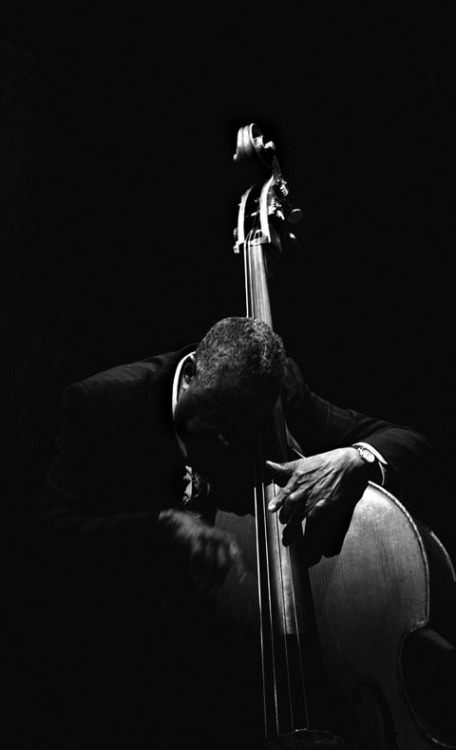
Loving the bass


One of the great benefits of playing the drums is that you get to sit right next to the bass and soak up its beautiful sound all night.  Drummers, if you do not love the sound of the bass you have a hard road ahead of you.  In order for the music to really work, you and the bass player are going to have to create a strong, musical partnership.  This parnership between the two of you is the rhythmic foundation for the entire band, it's engine.  All the great bands in the history of jazz have relied on this partnership.