Wednesday, January 7, 2015

New Home For The Melodic Drummer!

Where this blog lives now
The bad news is I will no longer be posting at this blogger site.  The good news is, I have a dedicated webpage which I will be using for future posting.  Thank you all for the support thus far, and feel free to visit my website at:

themelodicdrummer.com

Thursday, November 6, 2014

Brush Comping and Sweep Direction Part 2

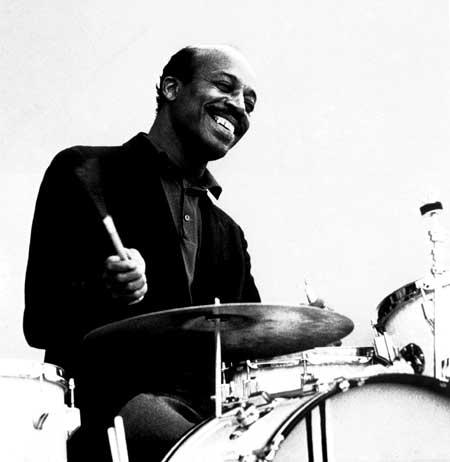
Kenny Washington
Picking right up where we left off with last weeks brush comping exercise:

3.  Practice comping using dotted quarter notes with music
By playing a simple dotted quarter note comping rhythm with your left hand, you will have a three bar phrase that uses every possible eighth note.  In other words if you start on beat 1, then the next note will be on the "+" of beat 2, the following note will be on beat 4, and so on.  I like this approach because it covers all the rhythmic possibilities without being too cluttered.  Make sure that you are not changing the direction of your comping to accommodate your comping rhythm.  Also, to make this phrase line up more clearly with the music, just add a fourth bar in which you comp freely.  So basically three bars of dotted quarter note, and one bar of whatever.  Focus on trying to keep your sweep sound as intact as possible and locking up with the bass player.  Here is my version:


4.  Comp freely with music keeping your sweeping direction steady
By the time you get to this step, you should be reasonably comfortable with the feeling of comping without changing the direction of your sweeping.  The idea in this step is to practice the way you want to sound when you are actually playing with other people.  In other words, try to sound good!  Don't overplay or rely too much on your new technique, just use it when its appropriate.  If you feel like you have to do extra thinking every time you want to comp in your awkward direction, then you probably aren't ready to use this technique in a real musical situation.  It has to be easy.  Also, this is a good time to try to pick up some ideas from Kenny Washington's beautiful and spare playing on this song if you haven't already.  Here is my version:


Overview

  • Start by practicing comping in your awkward direction with just your left hand
  • Practice only comping in your awkward direction with music
  • Practice playing dotted quarter notes with music
  • Comp freely with music
I like to go through "Lorelei" five times in a session, focusing on whatever of these steps is giving me trouble.  Just from the last several weeks of practicing like this almost every day I have noticed a significant improvement in the depth of my left hand comping.  It's not quite where I would like it to be, but this exercise has really been helping.  

I hope you enjoy the exercise, let me know if you have any questions. 

Tuesday, October 28, 2014

Brush Comping and Sweep Direction Part 1

A simple experiment
Recently I noticed something peculiar about my comping with brushes.  Depending on what rhythm I was comping, I would change my left hand sweeping pattern.  As with any discussion about brushes, this sounds more complicated than it actually is.  I suggest that you grab a pair of brushes and try the following experiment:

1.  Play your regular brush pattern and comp on the "+" of 1 with your left hand- does that feel comfortable?

2.  Try the same thing but comp on the "+" of 2- does that feel comfortable?

I have found that depending on how you hold the brush and what direction you sweep in, one of the two comping rhythms above will be significantly easier to execute than the other.  For me, comping on the "+" of 1 feels totally natural while the "+" of 2 does not.  

People tend to address this challenge in one of two ways, either they change their left hand sweeping pattern so that they comp the uncomfortable rhythm in a direction that is comfortable, or they just play the comping rhythm in their right hand.  Often times people (myself included) just cobble together some combination of these two approaches to find something that works.  


Integrating comping into your sweeping pattern
Of course, there is absolutely nothing wrong with finding something that works and sticking with it!   Recently however, I found myself feeling constrained by my brush comping.  I wanted to find a way to expand my rhythmic palette to make it feel more like comping with sticks.   I quickly realized that the most direct way to make my brush comping feel more like stick comping was to tackle the issue of integrating my comping into my sweeping pattern.  That is to say, learning to comp in whatever direction my left hand was naturally moving in.  

Those of you who are familiar with this blog know that I am a huge advocate of making every exercise as close to musical as possible.  With that in mind I came up with the following system:

1.  Practice only comping in your awkward direction with just your left hand
Before you do anything else with this, you have to work out the physical motion of your left hand that will achieve the comping sound you want without breaking up your sweeping.  This is more challenging than it sounds.  For example, I noticed that I put a little extra pressure on beats 2 and 4 in my left hand sweeping pattern.  So being able to release this pressure and get my fingers to snap the brush without breaking up the sweep entirely was hard.  What ended up working was thinking of the motion as the reverse of what I normally do on the "+" of 1.  So if I normally snapped my fingers out on that beat, I had to try to get a similar sound by snapping my fingers in on the "+" of beat 2.  Although this step can be really boring, don't skip it.  Everything after this will depend on your ability to get a good comping sound in your left hand.

2.  Practice only comping in your awkward direction with music
Now that your left hand is feeling at least reasonably good, it is time to get to the music.  For this exercise I highly recommend the song "Lorelei" from the Bill Charlap album "Written In the Stars".  Kenny Washington is playing drums on this album, and his brush sound, combined with the tempo and feel of this song, make it a perfect one to practice along with.  
For this step, simply practice playing time and comping consistently in your awkward direction.  For me this meant comping on the "+" of beats 2 and 4.  Don't worry about referencing the song too much in your playing at this point, just focus on getting a good sound and locking up with the bass player (the fantastic Peter Washington)  Here is what that will sound like with the melody:


Stay tuned for the second half of this exercise coming soon!


Tuesday, October 14, 2014

Food For Thought: A Minor "Stick Control" Revision

Lists imply hierarchy
Any list, no matter whether it is intended to or not, implies a hierarchy.  People generally seem to feel that things closer to the beginning of any list have a higher priority.  George Lawrence Stone's classic "Stick Control For The Snare Drummer" is easily the most widely used rudimental book.  It is also essentially a list of sticking combinations, or as Stone refers to them, "Single Beat Combinations".  That means that the section of the book with the highest priority, the first column, has become particularly important to many drummers practice routines.

Readers of this blog know that my personal favorite of the many fantastic methods using this first column comes from Alan Dawson, in John Ramsay's book "The Drummers Complete Vocabulary".  In a nutshell, this Dawson's method involves alternating between a line from the first column of "Stick Control" and groups of four, then eight, then sixteen notes on a hand.  Using this method means that your hands get very familiar with the first column of "Stick Control".

Something is missing
Recently while warming up with Dawson's method, I suddenly realized that something important was missing from the sequence in the first column of "Stick Control".  Having memorized this column years ago, it had been quite a while since I actually looked at the page, but when I opened the book it turned out that my sense that something was missing was correct.

G.L. Stone
In "Stick Control", Stone goes straight from double strokes starting on the right hand in line three, to double strokes starting on the left hand in line four.  On the surface this may seem perfectly logical, but to my mind the inversions of the double strokes were clearly missing (in my version of the book they don't show up until line 45!).  By inversions of double strokes I mean the following stickings: RLLR RLLR or LRRL LRRL.

My initial feeling that skipping over these inverted double strokes didn't really make sense was reinforced by the fact that Stone goes through all four inversions of the Paradiddle in the first column.  Going through the Paradiddle inversions makes perfect sense, but then why skip the double stroke inversions?


Wednesday, October 8, 2014

Uptempo Jazz 8: Fast Brushes Continued


Since my last post about uptempo brush playing I have made some progress and I thought I would share some helpful ideas.  


One of the top-selling jazz albums of all time!
Take five of these and see me in the morning
The center of my practice is playing along with "Surrey With A Fringe On Top" from the Ahmad Jamal album "Live at the Pershing".  This track is perfect for playing along with because the recording is very clear and concise, the tempo is strong, and Ahmad Jamal's drummer Vernel Fournier is an absolutely killer brush player (despite the fact that he said he never played brushes before being in Jamal's band!).   

The strategy I have been using is attractively simple, I just play along with this track five times a day every day. Within this basic framework I  have some additional recommendations:


  •   Focus on your right hand first.  Always try to maintain focus on your right hand "spang-a-lang" and getting a clear sound while staying relaxed.  This really is the most challenging thing about these tempos, more on this in a moment.
  •  Then focus on your left hand.  If your right hand is feeling good, try get your left hand sweep pattern as clear and focused as possible.  As I mentioned in an earlier post, like Kenny Washington I really am thinking of my left hand as a slightly rounded line that sweeps across the snare on every quarter note.
  • Learn the arrangement.  Once your hands are feeling good throughout the track, start focusing on learning the arrangement and the specific comping ideas that Vernel plays.  Pay particularly close to attention to how he plays the bass drum.  Vernel is originally from New Orleans, and like most drummers from New Orleans he has a very particular and very hip way of using the bass drum, even at this fast tempo.  
  • Record yourself!  At first, listening back to these recordings may be discouraging.  Use these recordings to identify specific problems that you need to address.  As you correct these individual problems, you will have recorded evidence of your progress.  The video at the top, although it does still have a couple of noticeable mistakes, represents a lot of progress for me.  I am much happier with my sound today than I am when I started this process!

Vernel Fournier

Don't worry about accenting two and four with your right hand
My great teacher and mentor Chuck Redd is a masterful brush player and shared the following insight with me.  Although it seems heretical, at these fast tempos it really helps to not accent beats two and four of your spang-a-lang.  Instead just aim for relaxed, clear, and even eighth notes and allow the hihat to do the accenting.  Playing the spang-a-lang this way helps your right hand to play more nimbly and goes a long way towards clarifying the groove.  Try it for yourself!  

Wednesday, January 23, 2013

Create An Arrangement Part 2


1. Now's The Time!
Charlie Parker
In this installment of the series I tried to take my drum arrangement to the next step by actually playing the "pitches" of the melody.  You can hear the melody played through twice starting around   after the brief introduction.  Although trying to get even a relatively simple melody like this across on the drums is a lot of work, it can can also inspire some really fascinating musical directions in your drumming, so in my opinion it is well worth it.  Here is the original Charlie Parker melody for reference:


Always inspiring
2. How to develop an arrangement
In addition to the overall idea of staying in the character/form of the song discussed in the last post here are some more strategies for developing your own arrangement.  
  • Experiment with different sounds and use those sounds to dictate what/how you play.  For example in my arrangement I start with the open snare/tom sound.  This sound strongly influences my playing lending itself to less cluttered and more melodic style drumming.  After a couple of choruses of that sound I transition into a closed snare sound which leads me to more intense and busy playing that builds intensity. 
  • Use rudiments thematically.  For example listen to how I use flams in this solo.  I am not playing a flam and then moving right on to another rudiment, I am really trying to explore the sound and feel of the flam all around the drum set.  Using rudiments this way can help you develop your solo in an unhurried way.  In general playing an unaccompanied solo like this can make you feel a lot of pressure to play everything you know right away, it is just you up there after all!  So combat this tendency by using rudiments in this fashion.
  • Listen to the greats.  Max Roach springs immediately to mind, but there are many others.  I know I sound like a broken record with this, but the truth is that ear-training is the single most important part of learning the drums.
  • Use call and response.  The idea of playing a simple idea and then responding to that idea is probably the single most common/helpful phrasing technique for drum soloists.  This kind of phrasing not only takes a lot of the pressure of improvising off, it creates a structure that listeners can easily grasp.  Communicating with an audience is always a challenge, particularly when you are talking about drum solos.  The conversational nature of call and response phrasing is perfect for confronting this challenge, so try incorporating it into your solo.
  • Use mistakes and unintended things to grow your arrangement organically.  As you are practicing  you will often stumble across great ideas entirely by accident.  For example initially I meant to turn on the snare and leave it, but it slipped.  When I turned the snare on again I had the idea of alternating between the snare on/off sound.  The truly great improvisers can incorporate these kinds of ideas on the fly, but for right now just think of them as new compositional elements for you to incorporate into your solo over time. 

3. Overall map of my arrangement
Each section or idea usually divides along roughly the lines of the form, hopefully some of these ideas will be useful or inspiring to you!
  • Short intro 
  • Melody twice
  • Solo with pitch
  • With Flams/Pitch
  • Pitches again, but more aggressive and with rolls
  • Alternating between snare on and off sounds
  • Press rolls and cymbal chokes
  • Open playing around the drums
  • Staccato rolls followed by looser rolls with right hand lead
  • Floppy long roll
  • Head out
  • Short outro

Sunday, November 11, 2012

Beyond A Beat Part 1

The Grady Bossa
My teacher (the great Chuck Redd) recently introduced me to a slick new way of playing the bossa nova that he picked up from listening to Grady Tate.  You can clearly hear and see Grady's Bossa at 7:58 in the video below:


Grady at work
The basic gist of this groove is that the right hand plays a guiro-like pattern with a brush instead of the typical eighth notes.  If you listen to how Grady plays this groove here, you quickly realize that this approach to bossa nova is much more than simply a beat.  Grady plays with such command that he is able to alter the beat to fit whatever is going on in the music.  In other words, Grady's bossa is beyond a beat, it is more like a style.  

Here is what the basic groove looks/sounds like:


Rather than simply showing you this groove, in this series of posts I am going to take you through the process that I am using to get myself beyond just playing this idea as a beat, in the hopes that it will help you navigate this process more efficiently yourself.

Step 1: Orient your ear
This step is reasonably self-explanatory but also surprisingly easy to overlook.  You need to know what a groove is supposed to sound like in context, so find some good recordings and dive in.  I would recommend a combination of really mentally engaged listening where you are trying to actively pick apart the groove, as well as more passive listening to let the overall sound wash over you.  For the Grady bossa, the song "O Grande Amor" from the Stan Getz album "Sweet Rain" is perfect:


Step 2: Get it in your hands
This step is all about the physical feeling of the groove, mastering the technique and coordination necessary to play the groove.  One really helpful tip with this step is get a lot of this work done away from the drum set.  This will help you use your actual time at the drum set more efficiently as well as open possibilities for more flexible practice. 

Here is an example of me practicing the Grady bossa away from the set:


Once you feel good away from the drums, it is time to work out the basic groove on the drums. Chuck has hipped me to practicing at 100 bpm, as this is a very challenging "in between" kind of tempo that tends to either rush or drag.  Check out the video of me playing at the top to hear what this sounds like at this tempo.

Ol' Faithful
Step 3: Generalize and expand possibilities
After you have a groove firmly in your ears and hands, the next step is to expand away from the basic beat by generalizing and working on variations.  In this case, generalizing means to find what makes a beat distinctive.  For the Grady bossa, the brush sweeping the guiro pattern over a bossa foot ostinato with a cross-stick sound in the left hand is what makes it distinctive.  But you can play just about any rhythmic variation with your left hand without compromising the distinctive sound of the groove. 

In order to get at some of these rhythmic possibilities, I like to use Syncopation to experiment. Here is a video of me playing through the first couple of lines of page 34 in this fashion again at 100 bpm:


In the subsequent posts in this series I will discuss more steps to getting beyond a beat, so stay tuned!

Sunday, October 14, 2012

Play like it's fun!

David Sanchez, a great musician and teacher!
Last week I had the privilege of studying and hanging out with the San Fransisco Jazz Collective.  This incredible group was engaged in a week-long residency at the University of Maryland where I am currently pursuing a masters degree. 

Play like it's fun
I wanted to share a profound observation that David Sanchez, the Collective's tenor saxophonist, laid on my group at one of these masterclasses.  We were playing "Freight Train" at an uncomfortably fast tempo, and everyone's playing, while technically correct, came across as tense and hurried.  David pointed out that an audience comes to enjoy themselves and have a good time, and that tension and stress on the bandstand translates directly into an unpleasant experience for the audience.  In other words, if you aren't enjoying the music you are playing, why would your audience? 


Like this
Here is an example of me playing the Monk tune "Pannonica" with a great group (Ted Baker on Sax, Tim Whalen on Piano, Joe Bussey on Bass) at Twins Jazz Club a couple of weeks ago:


If you mute the video and just watch us playing, you can easily tell how engaged we were in the music, and how much we were enjoying it.  Do you see how we are moving together and looking at each other?  This feeling of engagement and joy translated into a great night of music for our small but loyal audience. 

A simple reminder
No matter how hard the music you are playing is, how difficult the circumstances of the particular performance, how you feel about the people you are playing with, or what is going in your life, once you get on stage your job is to love what you do.  Music is meant to be enjoyed, and that enjoyment has to begin with you!

Thursday, August 16, 2012

Newk The Bass Drum Part 2

St. Thomas appreciated here!
St. Thomas appreciation week
It is apparently St. Thomas appreciation week here at the Melodic Drummer.  Today's post features a video example of me playing the first part of the bass drum exercise from the previous post in all its soul-crushing glory!


Preparing the bass drum mentally
I have spent a great deal of time practicing and thinking about the importance of preparing notes with my hands, but much less dealing with the issue of preparing my feet.  While practicing this truly difficult (to me) exercise, I re-discovered just how important preparing notes on the bass drum really is.  Doing something as simple as focusing on relaxing my foot and mentally anticipating/hearing the melody line was usually the decisive factor in a successful play through.  Quick quote from the bard that sums up my point nicely:


"All things are ready, if our minds be so" 
-Shakespeare

Tuesday, August 14, 2012

Making Weird Things Work


As promised in a previous post, here is a great example of how to escape from the sometimes monotonous head/solo/head format.  In this example of the song "Just You, Just Me", Chuck Redd (the vibes player) sets the pace by introducing a new melody halfway through the song.  This is not something that you can do lightly, and there are a number of instructive things that Chuck did to make sure that this unusual technique would work.  The following are three of these things extrapolated into general principles for making weird thing work. 

1.  Broadcast your intentions ahead of time
Chuck introduces the new melody ("Evidence" by Thelonious Monk) a chorus ahead of time by quoting it on the bridge at 3:26.  This gives the musicians in the band a heads-up that something funky could be going on (although I still totally bungled the transition to the new melody).  Of course there is nothing wrong with actually talking about an idea before you begin the song, but that is only if you think of it ahead of time and doing this can also take some of the fun element of surprise out of the music. 

2.  Listen
This is certainly not the first time I have brought up the importance of listening, but nowhere is it more obviously important than when something outside of the box is going on.  If you are just playing on auto-pilot and you aren't engaged in what is going on in the music around you, you will totally miss any subtle hints that something strange is happening and will most likely make a mess of things.  For example, notice how quickly everyone in the band picked up on the new melody.  Even though I was shaky for a second, because I was listening I could find my way back by the second A section.  

Another great example of listening is how Chuck picks up on the phrase from Nicki's solo (5:05) and turns it into a shout chorus!  

3.  Know what works and what doesn't
Chuck knew that "Evidence" fit well over "Just You, Just Me", and that it could easily be super-imposed for that reason.  Knowing when this sort of thing will work and on what songs is a key component to pulling it off.  Essentially, you can't move between melodies successfully in this fashion without a great deal of knowledge and experience.


This video is another from a great gig from several months back featuring my teacher Chuck Redd on vibes, Chris Grasso on piano, and Nicki Parrott on bass/vocals.  For residents of the DC area, if you want to hear some great jazz check out the calender at the Mandarin Oriental.  Chris books the shows there and always does a great job!

Sunday, August 12, 2012

Music, Music, Music


Great album + Awesome pun = Highly recommended
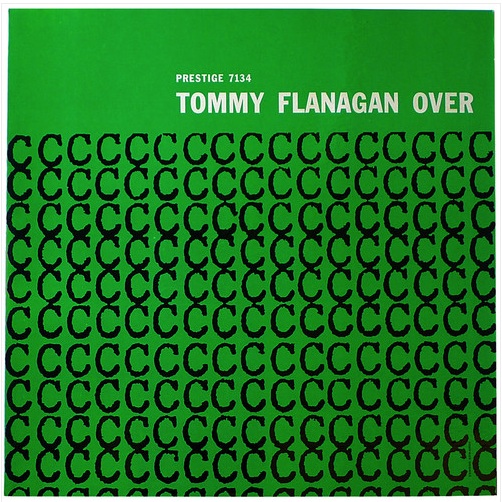
Tommy Flanagan Trio "Overseas" aka "Elvin Plays Amazing Brushes"
I didn't get hip to this album until this year when it was recommended by Jon McCaslin at FOUR ON THE FLOOR, and it has been a joy getting acquainted with it.  It is too easy to form a one-dimensional picture of Elvin Jones.  The irresistible force of his playing in the classic Coltrane quartet overshadows the many other sides of his playing.  Not that I have anything but the deepest love for that group, but it is good to hear Elvin playing in other contexts, in this case a straight-ahead piano trio featuring the great Detroit pianist Tommy Flanagan.  Elvin was a master musician, capable of adapting to fit any context in the enormous range of jazz music.  

The big highlight of this album for me is getting to hear Elvin's nasty brush playing.  In my experience Elvin is a really underrated brush player, despite the fact that his deep, rolling, triplety vocabulary works equally well with sticks or brushes.  Just listen to the track at the top ("Beats Up") for proof!   

Friday, August 10, 2012

Create An Arrangement


Practice by creating an arrangement
I was feeling inspired by a fantastic solo by Jeff Hamilton where he plays a whole arrangement of "Caravan" (it seems to have disappeared from the internet) on the drums, so I thought I would record my own version of "St. Thomas" as well as share some thoughts on how to play an arrangement in this fashion.  Making an arrangement of a song is a great practice tool for internalizing whatever tunes you are working on, soloing more compositionally, and often inspiring some great ideas that you wouldn't have thought of otherwise.


Here are some basic techniques to use when playing an arrangement:

1.  Come up with an overall map of the arrangement
It is important to understand the over-arching structure of the arrangement you are going to play so that you can anticipate what is coming next.  The map of my very basic arrangement goes like this:
  • Brief rubato intro on the cymbals
  • Max Roach inspired latin groove taken from the original Sonny Rollin's recording
  • Melody twice- I tried to match the contour of the melody on the drums
  • Solo section
  • Melody twice again
  • Ending- I tagged the last four bars three times
2.  Stay in the character of the song
In order for this style of solo to come across to an audience you need to spend some time thinking about how to keep your solo in the character of the song.  To accomplish this, when I am soloing I am constantly thinking about the melody of the song (for more on this check out my post about the two songs of jazz).  If you listen carefully to my solo you will hear me referencing the melody, playing off of the call and response structure of the phrases, and also outlining the form of the song.  

This is the most important part of this exercise, and is also the most difficult.  Start with simple ideas that come to you from the melody or structure of the tune and then build off of them.  Often using the most basic call and response style phrases is a great place to start.  Don't worry about trying to play your fanciest, most technical ideas, this isn't really the place for that.  Just play what comes naturally and take your time.  

For more inspiration on how to keep a solo in the character of a song, I would check out Max Roach.  As a matter of fact, his classic solo on "St. Thomas" is a great place to start:


3.  Try to give your solo a shape
Once you start to hear the song in your solo and you are feeling more comfortable, you can begin adding a macro dimension to your solo, a shape.  In the most basic sense you can think of your solo as an arc.  It has to start low and build intensity to some sort of climax before coming back down.  There are different variations of this shape, starting high before coming down and building back up, multiple crests and troughs, ending at a high point, but they all work on the same basic principle of tension and release.  

This deceptively simple phrase basically describes why music works, it builds up tension and then it releases it.  The important thing to take away is that if the shape of your solo is too flat for too long, you will lose your audience.  

There are a number of elements you can manipulate to build tension in your solo including:

  • Dynamics- How loud or soft are you playing?
  • Texture/Orchestration- What parts of the drum set are you using?
  • Note density- How many notes are you playing or not playing?
  • Rhythmic phrasing- Call and response?  Reference to the melody?  A groove?  Rudimental ideas?  
Essentially, the degree to which you use your musicality to control these elements will determine how much tension and release there is in your solo.  This in turn will effect what impact your solo will have on an audience.  More tension and release = Better solo.  


Monday, July 30, 2012

Newk The Bass Drum

Applying ideas from other instruments
As mentioned in a previous post, here is an exercise from my forthcoming book "Melodic Syncopation" that features Sonny Rollin's solo from "St. Thomas".  Just a friendly heads up, this exercise can be soul-crushingly difficult at first, so take your time! Max #5.pdf


Just for reference, here is the melody used in the exercise again:


Saturday, July 28, 2012

Brazilian Drumming For Jazz Musicians


1.  Don't be afraid to stretch
Zack Pride!
In my experience one of the biggest mistakes that drummers make when playing Brazilian music is that they get so caught up in trying to play the groove "correctly" that they forget to try to make music.  One of the really beautiful things about Brazilian music in general is how it is infused with the spirit of improvisation, so don't be afraid to experiment and go with your instincts!  

For example in the recording of "How Insensitive" at the top (with Chris Grasso on piano and Zack Pride on bass, make sure to listen with headphones), listen to how I start out with by just sketching a rhythm with my right hand during the A section of the melody, or how I go into a kind of weird Bolero on the snare drum on the vamp out.  These things aren't really textbook or correct playing, I just thought they sounded good at the time. 

Speaking of sounding good, how sick was that bass solo?!  Zack Pride ladies and gentleman. 

2.  Check out Milton Banana
My excellent teacher Chuck Redd suggested that I check out some Milton Banana to help deepen my Brazilian concept.  I have absolutely loved learning about his music, and I highly recommend that everyone who wants to learn about Brazilian drumming make this a priority.  One thing I immediately noticed about the way Milton grooves is how he uses a strong bass drum (particularly on beats two and four) and an ever so slightly swung eighth note feel to give a strong, earthy samba feel to everything he plays.  Listen:


If like me you have somehow gotten to this point in your life without checking out this fantastic book by Duduka da Fonsceca and Bob Weiner, there is no time like the present.  Here is a solid write up from Cruiseshipdrummer on all the relevant literature.  Books like this can help you get a lot of essential information fast, but it is important to remember that you need lots of listening/application/experience for all of it to be useful.  


Thursday, July 26, 2012

Food For Thought: Listening Outside Of Your Instrument

Listening outside of your instrument
In my experience, any musician can fall into the trap of only listening to their particular instrument for inspiration.  There are a number of advantages to listening outside of your instrument, particularly for drummers. 


1.  Rhythmic genius isn't drum specific
As I mentioned in another post, the jazz musicians who have made the biggest impact on the music all had really deep rhythmic vocabulary, regardless of their instrument.  My favorite example of this is the tenor saxophonist Sonny Rollins.  If you haven't already, check out his classic solo on "St. Thomas" (starts around :55):


Did you hear how he took that little two-note idea through all those hip rhythmic variations?  I have a whole exercise from my forthcoming book devoted to this solo, and you can easily see how Sonny's style of playing could translate on to the drums.

Sunday, July 8, 2012

Food For Thought: Rushing


Rushing isn't necessarily bad
Saying that rushing isn't necessarily bad may be a somewhat controversial opinion, but I believe we need to rethink how we use this word.  Here is a simple experiment to illustrate my point: 

The great bassist Hassan Shakur!
1.  Listen to the recording at the top (which features my great teacher Chuck Redd on Vibes, Ehud Asherie on Keys, and Hassan Shakur on Bass) straight through.  Ask yourself how it sounded and felt.  To my ear the whole things sounds pretty good and the band is swinging throughout.

2.  Now listen again, but this time skip from the head in right to the head out.  We were definitely rushing!

Here is the thing, human beings don't really experience or play music non-linearly.  We can and should only play what feels good in the moment, and in general, what feels good in the moment isn't necessarily metronomically precise.  If we go back and analyze a recording, sometimes what felt good in the moment is essentially a gradual increase in tempo over the course of a song.  In other words, rushing.  I have found that this tendency to rush seems most powerful in a live setting. 

Another more famous example from Max Roach, try doing the same listening experiment:


Again, to my ear this recording sounds great all the way through, but man are they rushing like crazy!

Thursday, July 5, 2012

Misdirection


Misdirection
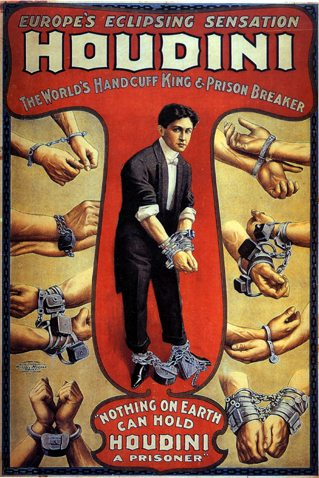
One important technique that is also, due to it's nature, frequently overlooked is misdirection.  The point of misdirection is to lead your audience to pay attention to one thing so that another thing you are doing can appear startlingly effortless.  At around :30 in the clip above notice how I play a pretty bold comping figure with my L.H. while I am reaching over to switch to sticks.  This use of misdirection makes it so that my ride cymbal beat seems to just materialize. 

Make it look easy
What is the point?
The point of musical performance as opposed to say, magic, is not to confound but to move or inspire an audience.   The importance of misdirection therefore is not illusion for illusions sake, but rather to wrap what you are doing in a shroud of effortlessness.  The experience of watching a musician struggling can range from distracting to painfully awkward for an audience, so masking difficulty with some clever misdirection can remove a barrier between your audience and your music.  In other words, judicious use of misdirection can make for a better performance.

The master at work
Notice in the clip below how much Papa Jo does to give the impression of effortlessness.  Everything from his posture, to what he does with his hands, to his facial expressions seem to disguise how difficult what he is playing really is.  What we the audience are left with is an amazing show:


Monday, July 2, 2012

Soloing Over A Vamp


Tension and release in a solo over a vamp
The easiest and most effective device that you have at your disposal when soloing over a vamp is choosing when to play with the band and when to play something against what the band is playing.  This may sound like an oversimplification, but this is basically how the tension and release work in this kind of a solo.  Essentially, playing against what the band is doing produces tension that is released when you finally play something in unison. 

In the clip above notice how I would periodically release in this fashion by playing the hits of the vamp with the band.  In my experience, doing this occasionally helps keep the band together as well as the audience engaged in the music. 

Two tips
He is actually this cool.
The most important skill to develop to solo over a vamp is to try to sing or hear the vamp throughout whatever you are playing.  This idea goes back to my general philosophy of the two songs of jazz, but it is even more important in this case than in an open solo, because in this case there are literally two songs going on at the same time (your solo + the vamp = two songs).  How well you are able to interact with the vamp is directly tied to how well you can hear it in your head while you are playing.  

To practice this, try something straightforward like improvising a vamp, and then trying to sing it while you play against/with it.  You will quickly discover that this seemingly simple exercise is actual fraught with difficulty, and is something you really need to work at to develop.  

The other thing I would recommend you do is to listen to some great players soloing over a vamp.  One of the drummers I always love to listen to and draw from for this type of playing is Roy Haynes.  Check him out here with his band: 


Saturday, June 30, 2012

Trading 4's: Passing Ideas


Passing Ideas
Notice how I picked up on the rhythmic phrase that the pianist played at the end of his solo and used it as the basis for mine (listen around :17)?  Passing ideas between soloists like this weaves the music into a more cohesive whole.  This technique is a great one because strengthening the connection between solos benefits both the musicians on the bandstand and the audience. 

You see?  They love it!
Musicians will feel that you are listening and responding to what they are actually doing, not just operating in your own mental space.  This in turn will give them the confidence to take more chances with the music and generate lots of positive energy. 

In my experience, audiences also love this kind of interaction on the bandstand.   Jazz is not popular music anymore, and often times audiences will not have a lot of experience listening to it, especially not live.  Passing ideas like this is a way of bringing your audience into the performance by making the connection between solos as clear as possible. 

Dont Forget About "Yes, And"
For this kind of interaction to work you need to remember the principle of "Yes, And"  discussed in an earlier post.  The basic gist is, when you are passing ideas don't just parrot back whatever the last person played, add something of your own to it.  In the clip above I did this by adding my own idea at the end of my phrase. 

Monday, June 25, 2012

Chopping Wood


Chopping wood is great for building energy unobtrusively
Chopping wood, meaning playing a strong rim-click on beats two and four, is an effective technique for building energy in a song while also staying out of the way.  I am particularly fond of chopping wood when more than one soloist is trading (like in the clip above starting around :52), as I find that trying to switch gears between different soloists can lead to tedious and overly complicated playing.  In my experience it is better to just play good time, build energy, and not clutter up the soloists ideas.

The Lumberjack, Sam Woodyard
General Playing Tips
In general, once you start chopping wood don't move away from it too quickly.  This is because chopping wood works best gradually and over time, and switching in and out of it too abruptly can feel herky-jerky to the other musicians and audience. 

You can do some simple bass drum comping and marking of the form while chopping wood, but don't try to do too much.  The main thing here is just the intensity of the groove, so focus on building energy and enjoy the feeling you are helping to create. 

Perhaps the greatest recorded example of chopping wood, and also a brilliant guide for learning how to use this technique, is Sam Woodyard's epic performance on "Diminuendo and Crescendo in Blue" from "Ellington At Newport 1956".  I spent a whole summer playing along with this track just to try to capture some of it's feeling, check it out: