Showing posts with label tony williams. Show all posts

Monday, May 28, 2012

Food for Thought: Rules of Improv

She really is a boss

Food For Thought
This series of posts is all about trying to approach music in a new way.  In my last post in Food for Thought, I discussed some alternate possibilities to always playing head-solo-head.  In today's post I am going try to get some inspiration from a source entirely outside of the world of music.

The Rules of Improvisation
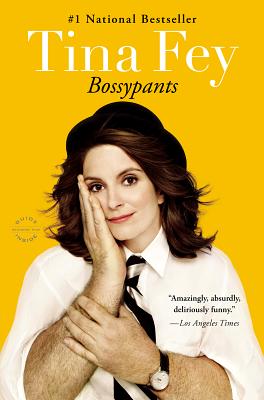
My wife (an improv enthusiast and the source of the link to the left) and I sometimes have conversations about the similarities between improv comedy and improvised music.  So today's ideas come from these conversations as well as a somewhat unexpected source, Tina Fey's new book "Bossypants".  The entire book is hilarious, but the thing that really caught my attention were her "rules of improvisation".  I will share these rules with you and try to highlight how these same rules apply to jazz drumming.  


1.  Always Agree
The underlying idea to this rule is that in order for improv to work, you have to "respect what your partner has created".  This builds up a foundation of trust so that a group can work together and create something.  
Our man Higgins
I think the wisdom of this rule is immediately clear to any jazz musician.  If you don't listen to and respect what your band-mates are doing, the atmosphere on the bandstand will become poisonous.  I think "respecting what your partner has created" is especially the case for drummers.  We are primarily accompanists; our job is to make a soloist sound as good as we possibly can.  A great drummer can lift the music of an entire band if they respect what the band is doing and work with it.  Conversely, a drummer with a dismissive or contrary attitude who refuses to acknowledge what is going on around them can sabotage even the best of bands.

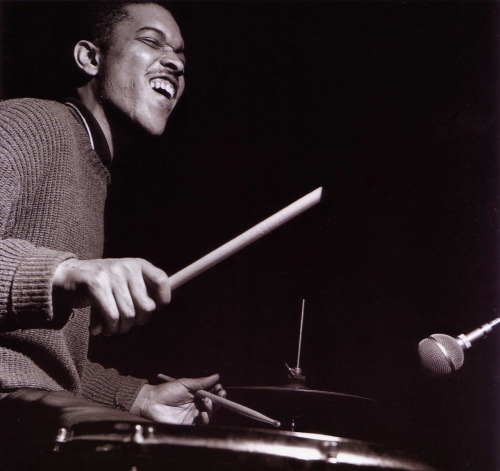
When I think of drummers who could "always agree" and uplift a band with their beautiful attitude, Billy Higgins springs to mind.  This man was a living example of "always agreeing", and this ability of his allowed him to play a stunning range of music, from straight-ahead to avant-garde and everything in between.


Monday, May 21, 2012

The Evolution of Drumming

Drumming hasn't gotten better
One of the biggest misconceptions about drumming that I had as a young student of the instrument, was that the art of drumming has gone through a historical progression.  That is to say that over time drummers have elevated the craft of drumming, so that what people are playing today is infinitely more sophisticated and better than the great drummers of the past.  After all, I thought, back then drummers didn't even have double bass pedals, so how could they play anything like this?


Evolution doesn't mean improvement
This guy will cut you with brushes!
This is an easy and common mistake to make when you are learning about the drums, and I think the basic problem comes down to the misuse/misunderstanding of the word "evolution".  Essentially, evolution doesn't mean improvement, it means changing to adapt to changing circumstances.  In the world of biology this means that every organism that survives this process is highly adapted to one particular niche.  So fish are really good at swimming, and birds are really good at flying. 

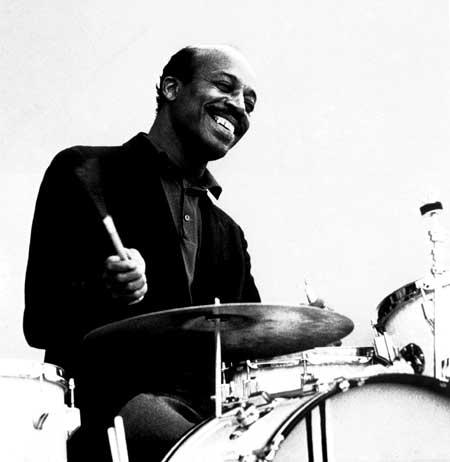
In the world of drumming the exact same idea applies.  Great drummers of the past mastered the musical niche of their time and place. While it is true that Papa Jo never played any ferocious double pedal drum solos, it also true that he could play circles (forgive the pun) with the brushes around just about anyone alive today.


The reason for this is simple, Papa Jo had to play brushes to survive and thrive in the musical environment he lived in.  That in and of itself doesn't make Papa Jo a better or worse drummer than Thomas Lang, it just makes him different

Thursday, March 8, 2012

Shout!


In today's post I wanted to talk about a part of the song that prominently features the drums, the aptly named shout section!  This is generally the climax of an arrangement, and is usually the spot where a drummer is given space to cut loose.  Although the conventions of the shout section were developed in big bands, the same ideas can apply to smaller ensembles.  The following are some good general strategies and ideas for playing a great shout.

1.  Study the greats
You may notice that I almost always bring this up whenever I am talking about learning the drums.  That is because not listening to the music you want to play and then expecting it to sound great is like expecting to be able to write poetry if you were raised by a pack of wolves.  How would you even know where to begin?  You have to have a frame of reference, a sound in your ear, before you can really aspire to produce anything great.

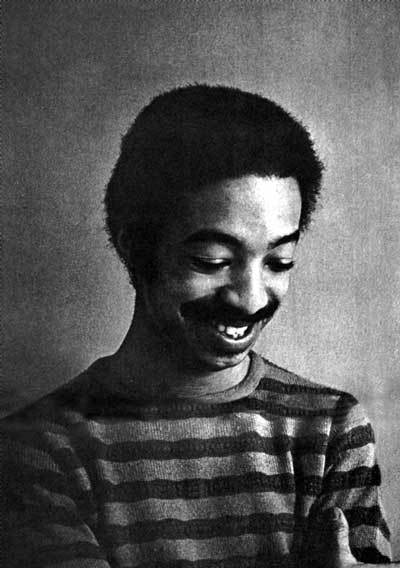
I mentioned this in an earlier post, but every great drummer in the history of the instrument has spent a considerable amount of time just trying to absorb what previous drummers have done.  If you still need convincing, here is how the great Tony Williams put it:

"You know the reason I play the way I do is because, when I first started playing, all I ever wanted to do was to sound like Max Roach, was to sound like Art Blakey, was to sound like Philly Joe Jones, was to sound like Louis Hayes, was to sound like Jimmy Cobb, was to sound like Roy Haynes. I really wanted to figure out why they sounded the way they did. I wasn’t interested in my own style. So I set about playing like these guys religiously, and playing their style because it was just such a wonderful, magical experience."

That being said, here is a classic example of some great drummers playing great shout sections to get you started:

-Mel Lewis on "The Groove Merchant" (starts around 7:26)


Saturday, October 29, 2011

The two songs of jazz part 2

In the Tony Williams post yesterday I touched on the idea of the historical evolution of the drum set.  Here is a longer explanation of that concept from the introduction to my forthcoming book "Melodic Syncopation":


In addition to being designed around melodies, the exercises in this book are further categorized into seven sections, each devoted to an important drummer.  These drummers represent the evolution of jazz drumming and are all worthy of study and emulation. The exercises in each drummer’s section develop an ability that corresponds to a significant element of that drummer’s sound.

The drummers are arranged chronologically by date of birth, and as you proceed through the book you will see how each one both explores new ideas and techniques on the drums and also refers back to earlier drumming styles.  In general, the trend in jazz drumming moves from a relatively strict supporting function, with a limited focus on specific parts of the drum set (Papa Jo), all the way to an almost continuously improvised leading function, with a nearly equal treatment of all parts of the drum set (Tony Williams).