Saturday, June 30, 2012

Trading 4's: Passing Ideas


Passing Ideas
Notice how I picked up on the rhythmic phrase that the pianist played at the end of his solo and used it as the basis for mine (listen around :17)?  Passing ideas between soloists like this weaves the music into a more cohesive whole.  This technique is a great one because strengthening the connection between solos benefits both the musicians on the bandstand and the audience. 

You see?  They love it!
Musicians will feel that you are listening and responding to what they are actually doing, not just operating in your own mental space.  This in turn will give them the confidence to take more chances with the music and generate lots of positive energy. 

In my experience, audiences also love this kind of interaction on the bandstand.   Jazz is not popular music anymore, and often times audiences will not have a lot of experience listening to it, especially not live.  Passing ideas like this is a way of bringing your audience into the performance by making the connection between solos as clear as possible. 

Dont Forget About "Yes, And"
For this kind of interaction to work you need to remember the principle of "Yes, And"  discussed in an earlier post.  The basic gist is, when you are passing ideas don't just parrot back whatever the last person played, add something of your own to it.  In the clip above I did this by adding my own idea at the end of my phrase. 

Monday, June 25, 2012

Chopping Wood


Chopping wood is great for building energy unobtrusively
Chopping wood, meaning playing a strong rim-click on beats two and four, is an effective technique for building energy in a song while also staying out of the way.  I am particularly fond of chopping wood when more than one soloist is trading (like in the clip above starting around :52), as I find that trying to switch gears between different soloists can lead to tedious and overly complicated playing.  In my experience it is better to just play good time, build energy, and not clutter up the soloists ideas.

The Lumberjack, Sam Woodyard
General Playing Tips
In general, once you start chopping wood don't move away from it too quickly.  This is because chopping wood works best gradually and over time, and switching in and out of it too abruptly can feel herky-jerky to the other musicians and audience. 

You can do some simple bass drum comping and marking of the form while chopping wood, but don't try to do too much.  The main thing here is just the intensity of the groove, so focus on building energy and enjoy the feeling you are helping to create. 

Perhaps the greatest recorded example of chopping wood, and also a brilliant guide for learning how to use this technique, is Sam Woodyard's epic performance on "Diminuendo and Crescendo in Blue" from "Ellington At Newport 1956".  I spent a whole summer playing along with this track just to try to capture some of it's feeling, check it out:

Thursday, June 21, 2012

Music, Music, Music


Ballads and calligraphy
A statement
This is sort of the opposite end of the spectrum from the last post.  To me, great ballad drumming is somewhat akin to Japanese calligraphy.  In order to work, both art forms have to be approached with almost unselfconscious mastery and be defined as much by negative space as positive (check out 4:59 above for a stunning example of negative space).  Here is a excerpt from the related Wikipedia article:

"For any particular piece of paper, the calligrapher has but one chance to create with the brush. The brush strokes cannot be corrected and even a lack of confidence will show up in the work. The calligrapher must concentrate and be fluid in execution. The brush writes a statement about the calligrapher at a moment in time."

Kenny Washington exemplifies this kind of mastery.  Every motion he makes on this recording has a purpose, and every motion he doesn't make has a purpose as well.  His playing is entirely in service of the music without even a trace of self-aggrandizement.  As a listener, this kind of music gives me the feeling of being present in a particular moment and being grateful for that moment. 

Wednesday, June 20, 2012

Philly Joe-Ism


In today's post we are going to be talking about learning and applying a great four-bar phrase from Philly Joe.  You can hear this phrase twice starting at 3:51 in the recording above, which incidentally is from the album "Kelly At Midnite" that I recommend everyone check out.

Two elements that make this "Philly Joe-ism" so great
This elegant phrase has two elements that make it particularly ear-catching.  The first and most obvious is the left-handed triplet that Philly Joe builds an exciting tom melody on top of.  The second is the way he paces the phrase so that it starts out relatively uncluttered before building to a climax in the sextuplets of the fourth bar.  Here is what it looks like on the page:


Monday, June 18, 2012

Music, Music, Music


Quarter Notes!
Louis Hayes + Sam Jones = Unstoppable Juggernaut of Swing
As I have mentioned in a previous post on the ride cymbal beat, one of the most efficient ways of learning how to get comfortable in a particular tempo or style is to isolate your ride cymbal and play along with a great recording until your beat feels grounded.  

One of my current favorite drum/bass combinations to work on uptempo jazz is Louis Hayes and Sam Jones, heard at their driving finest in the clip above.  I have been working hard on trying to capture some of the unbelievable forward momentum of this duos quarter notes the last couple of weeks, and I have experienced noticeable improvement (still a long way to go).  If you are trying to improve your uptempo playing, I strongly recommend checking out this recording from the Cannonball Adderley "Nippon Soul". 

Wednesday, May 30, 2012

5/4 Dawson Exercise

This exercise was swiped!
A Swiped Single Stroke Exercise!
Today's single stroke exercise comes from a combination of two different exercises that I swiped.  The first was Todd Bishop's idea of translating "Stick Control" into 5/4.  As usual, Todd's ideas are brilliantly clear, useful, and thought-provoking all at the same time.  

I wanted to find a way to incorporate this idea into things that I was already practicing, so I thought of combining it with Alan Dawson's fabulous single stroke exercise from "The Drummers Complete Vocabulary".


The result is below, and I am happy to report that based on my time with it so far it is a great way to both work on your single strokes, and to get your hands feeling more comfortable in 5!

The Dawson Single-Stroke Exercise In 5/4
For those of you not familiar with the Dawson Single-Stroke exercise, the premise is really simple.  Using the first column of "Stick Control" alternate between playing a line and playing two measures of eighth notes in groups of four to a hand.  Always start the groups of four on the opposite hand of the one that played last on the line.  The result is a great exercise for developing your single strokes, as well as your ability to move seamlessly between rudiments.

Here is that same exercise translated into 5/4 ala Todd Bishop:

Monday, May 28, 2012

Food for Thought: Rules of Improv

She really is a boss

Food For Thought
This series of posts is all about trying to approach music in a new way.  In my last post in Food for Thought, I discussed some alternate possibilities to always playing head-solo-head.  In today's post I am going try to get some inspiration from a source entirely outside of the world of music.

The Rules of Improvisation
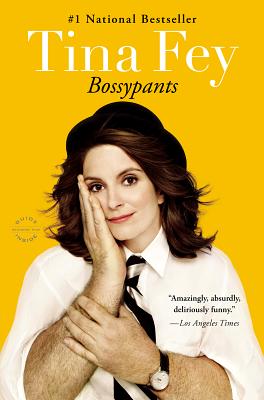
My wife (an improv enthusiast and the source of the link to the left) and I sometimes have conversations about the similarities between improv comedy and improvised music.  So today's ideas come from these conversations as well as a somewhat unexpected source, Tina Fey's new book "Bossypants".  The entire book is hilarious, but the thing that really caught my attention were her "rules of improvisation".  I will share these rules with you and try to highlight how these same rules apply to jazz drumming.  


1.  Always Agree
The underlying idea to this rule is that in order for improv to work, you have to "respect what your partner has created".  This builds up a foundation of trust so that a group can work together and create something.  

Our man Higgins
I think the wisdom of this rule is immediately clear to any jazz musician.  If you don't listen to and respect what your band-mates are doing, the atmosphere on the bandstand will become poisonous.  I think "respecting what your partner has created" is especially the case for drummers.  We are primarily accompanists; our job is to make a soloist sound as good as we possibly can.  A great drummer can lift the music of an entire band if they respect what the band is doing and work with it.  Conversely, a drummer with a dismissive or contrary attitude who refuses to acknowledge what is going on around them can sabotage even the best of bands.

When I think of drummers who could "always agree" and uplift a band with their beautiful attitude, Billy Higgins springs to mind.  This man was a living example of "always agreeing", and this ability of his allowed him to play a stunning range of music, from straight-ahead to avant-garde and everything in between.